
Golfing News & Blog Articles

Major winner implodes on 18 to miss Masters cut in agonizing fashion
Brooks Koepka's major made-cut streak came to a devastating end as he imploded on the 18th hole to miss the weekend at the Masters.
The post Major winner implodes on 18 to miss Masters cut in agonizing fashion appeared first on Golf.
The funny Masters similarities between Rory McIlroy and Bryson DeChambeau
Rory McIlroy and Bryson DeChambeau are golf's two most different stars. At the Masters, though, they're united by a shared struggle.
The post The funny Masters similarities between Rory McIlroy and Bryson DeChambeau appeared first on Golf.
Why Augusta’s greens make even the best ball strikers nervous
What makes Augusta National's famously fast greens so uniquely terrifying? I spoke with a GOLF Top 100 Teacher to find out.
The post Why Augusta’s greens make even the best ball strikers nervous appeared first on Golf.
2025 Masters tee times: Saturday pairings for Round 3
Complete 2025 Masters tee times for Saturday's third round at Augusta National, featuring Justin Rose, Bryson DeChambeau and more.
The post 2025 Masters tee times: Saturday pairings for Round 3 appeared first on Golf.
At the Masters, these are the hardest gear changes for pros to make
These are the two hardest clubs for pros to change before a tournament. Here's why these clubs become so personal.
The post At the Masters, these are the hardest gear changes for pros to make appeared first on Golf.
These premium clubs propelled Justin Rose to the top of Masters leaderboard
Justin Rose plays a mixed bag that includes no fewer than four different brands. Shop his driver, irons and more here.
The post These premium clubs propelled Justin Rose to the top of Masters leaderboard appeared first on Golf.
How does a 67-year-old beat 33 players at the Masters? He explained
For Bernhard Langer, it hasn’t been a fair fight at Augusta National for years. And yet he keeps hanging around.
The post How does a 67-year-old beat 33 players at the Masters? He explained appeared first on Golf.
'Come on, dude': Masters fairway marshal interferes with Max Homa shot
A Masters fairway marshal interfered with a Max Homa shot on the 8th hole during first-round play at Augusta National.
The post ‘Come on, dude’: Masters fairway marshal interferes with Max Homa shot appeared first on Golf.
2025 Masters cut rules: Who makes the cut at Augusta National?
Some will spend Friday the Masters trying to climb into contention. Others will just be trying to get on the right side of the cut line.
The post 2025 Masters cut rules: Who makes the cut at Augusta National? appeared first on Golf.
Odyssey unveils Red Seven X putter | What you need to know
The new Odyssey Red Seven X putter is based on Xander Schauffele's gamer that he used to win two majors last year.
The post Odyssey unveils Red Seven X putter | What you need to know appeared first on Golf.
Odyssey Releases Xander’s Red Seven X Putter
Sometimes I swear we are living in a simulation. Right after receiving the email about the new Odyssey Red Seven X, I watched Xander Schauffele sink a 60-foot putt at the Masters.
It’s like whoever is controlling the narrative of my life wanted me to pay extra attention to this putter.
Truth be told, the bomb-dropping synergy was unnecessary. Schauffele’s prowess with his Red Seven X is well-documented and includes some serious achievements. Two majors and an Olympic gold medal makes for a hell of a resume for any putter.
As we move officially into the 2025 golf season, Odyssey wants you to be able to putt like Schauffele, or at least play the same putter.
Red, milled, AI-free
The Odyssey Red Seven X is a bit of a throwback putter. First of all, it’s red. Odyssey was all-in on red (and black) putters back in their 2017 O-Works line. Since then, only Schauffele’s putter is red.


What Do PING’s New Putters And The Fastest Shoe In the World Have In Common?
Golf isn’t a sprint. It’s a marathon.
Just because you bogey the first hole doesn’t mean you can’t make up for it on the next. Or the next. That three-putt on the front nine is all but forgotten when you nail a birdie putt on 18.
Because it doesn’t matter how you start. Like a 26.2-mile race, it only matters how (or where) you finish.
But what if we take the analogy one step further?
Golf, like running, requires proper equipment. Playing a round with an ill-fitted putter or crappy golf ball is equivalent to running 26.2 miles in flip-flops. It just doesn’t work.


Best Drivers For Forgiveness 2025 (Top 37 Ranked)
Every golfer can benefit from a little forgiveness. During our 2025 driver testing, a few models stood out for their ability to perform consistently across a wide range of swing speeds and handicap levels.
It’s worth noting that some of the most forgiving drivers didn’t finish at the top of our overall rankings. That usually comes down to one thing—distance. In many cases, there’s a tradeoff between distance and forgiveness that golfers need to weigh. If your priority is keeping the ball in play and avoiding big misses, these are the drivers worth your attention. They have the most consistent carry distance and ball speed deltas and the smallest dispersion in the test.
The best driver for forgiveness
The most forgiving driver of 2025 is the PXG Black Ops 0311 Tour-1. It did a great job of producing repeatable outcomes but it had some weaknesses when it came to accuracy. Testers frequently saw a strong right bias and punishing results on mishits, contributing to its 21st-place finish overall. It’s a high-potential driver for players prioritizing forgiveness but proper fitting is essential to unlock its full performance.
Best drivers for forgiveness in 2025
Here’s a ranked list of the best drivers for forgiveness in 2025, from most-forgiving to least-forgiving.
| Club Name | Forgiveness | Overall |
|---|---|---|
| PXG Black Ops 0311 Tour-1 | 9.5 | 8.9 |
| Srixon ZXI Max | 9.5 | 9.1 |
| PING G440 LST | 9.5 | 9.6 |
| Honma TW 767 Max | 9.2 | 8.4 |
| PING G430 MAX 10K | 9.2 | 9.6 |
| PING G440 SFT | 9.2 | 9.4 |
| COBRA DS-Adapt Max K | 9.1 | 9.6 |
| Callaway Elyte | 9.1 | 9.3 |
| Wilson DYNAPWR Max | 8.8 | 8.6 |
| Sub 70 859 Pro | 8.7 | 9.1 |
| Tour Edge Exotics E725 | 8.7 | 9.2 |
| Callaway Elyte Triple Diamond | 8.7 | 9.9 |
| Callaway Elyte X | 8.7 | 9.5 |
| COBRA DS-Adapt LS | 8.7 | 9.4 |
| Srixon ZXI | 8.7 | 8.6 |
| PXG Black Ops 0311 | 8.7 | 8.9 |
| Honma TW 767 LS | 8.6 | 8.3 |
| Honma TW 767 | 8.5 | 8.7 |
| Titleist GT4 | 8.5 | 9.3 |
| COBRA DS-Adapt Max D | 8.5 | 8.2 |
| Cleveland HiBore XL | 8.4 | 8.2 |
| TaylorMade QI35 Max Lite | 8.3 | 8.4 |
| Wilson DYNAPWR LS | 8.3 | 8.5 |
| Tour Edge Exotics C725 | 8.2 | 9.0 |
| PING G440 MAX | 8.2 | 8.8 |
| Titleist GT2 | 8.2 | 9.5 |
| COBRA DS-Adapt X | 8.1 | 9.1 |
| Wilson DYNAPWR Carbon | 8.0 | 8.7 |
| Srixon ZXI LS | 8.0 | 9.1 |
| Titleist GT3 | 8.0 | 9.4 |
| TaylorMade QI35 Max | 7.9 | 8.7 |
| TaylorMade QI35 | 7.8 | 9.1 |
| TaylorMade QI35 LS | 7.8 | 9.0 |
| Sub 70 859 | 7.8 | 8.8 |
| Cleveland HiBore XL Lite | 7.8 | 8.0 |
| Stix Golf Compete Driver | 7.7 | 8.2 |
| Titleist GT1 | 7.6 | 8.4 |
Drivers with strong forgiveness that still finished in the top 10 overall
If forgiveness is your priority but you don’t want to throw accuracy and distance out the window, you have options. These drivers still finished in the top 10 overall but also had strong forgiveness and consistency.


What The Heck Does Soccer’s Gareth Bale Know About Golf Shoes? A Lot!
Hanging up his soccer spikes after a brilliant career on the pitch with Tottenham Hotspur, Real Madrid, Los Angeles FC and the Welsh national team, the adidas global athlete has transitioned to golf having assumed an elevated role as a brand ambassador for adidas Golf footwear and apparel. His footwear of choice these days is adidas CodeChaos25.
During the relaunch of Originals Golf at adidas World of Sport headquarters in Herzogenaurach, Germany, Gareth Bale did a walking one-on-one interview with MyGolfSpy contributor Rick Young about the striking similarities between his two sports footwear choices, why golfers should think of their golf shoes as equipment and why comfort is king.
Q: How do adidas and adidas Golf fit in with the Gareth Bale brand?
Bale: I’ve been with them my whole career. I always wore adidas growing up. It was the boot that I loved, the brand that I loved, my dad loved it so, yeah, it’s been a bit of dream come true to work with them from the start and still be with them today. We had a great relationship throughout my football career and now with the golf and it’s been really fun to be part of.
Q: Pretty rare for an athlete to represent a company like adidas in two completely different sports.


Golf Galaxy is Giving Away a Million Dollars For a Hole in One. Think You Have What it Takes?
Listen, I know you’ve been buying up those Powerball and Mega Millions tickets when the jackpot skyrockets to unfathomable amounts of money. And I get it, it would be insane to win that much money. However, those odds aren’t looking too pretty at around 1-in-290-million.
But there’s one thing you can do to win a million bucks at 12,500-to-1 odds. Now, I’m not saying you’ll be printing money but this is free and plays into every golfer’s dream: a hole-in-one.
The Million Dollar Hole-in-One Challenge
Dick’s House of Sport and Golf Galaxy are pulling out all the stops in this competition and it couldn’t be easier to sign up! Check out the details below for information on how to score your chance at a cool (in Dr. Evil’s voice) one million dollars!
Who: Any consumer can participate in the challenge.When: The challenge is open from April 6, 2025-May 31, 2025.What: Consumers can enter to win the $1 Million Hole-in-One Challenge by simply visiting a Golf Galaxy or DICK’S House of Sport location and signing up for a free Scorecard account. Participants must see a store associate for details. There is no purchase necessary to enter the challenge.Prize: Any consumer who can score a hole-in-one will win $1,000,000. *If multiple players win, the $1,000,000 prize will be split among all winners.
So, my golfing community friends, I now pose this question to you:

Forum Member Review: Callaway Opus And Opus Platinum Wedges
The Callaway Opus wedges represent a significant advancement in wedge design, blending artistry with cutting-edge technology to enhance short-game performance.
Key features:
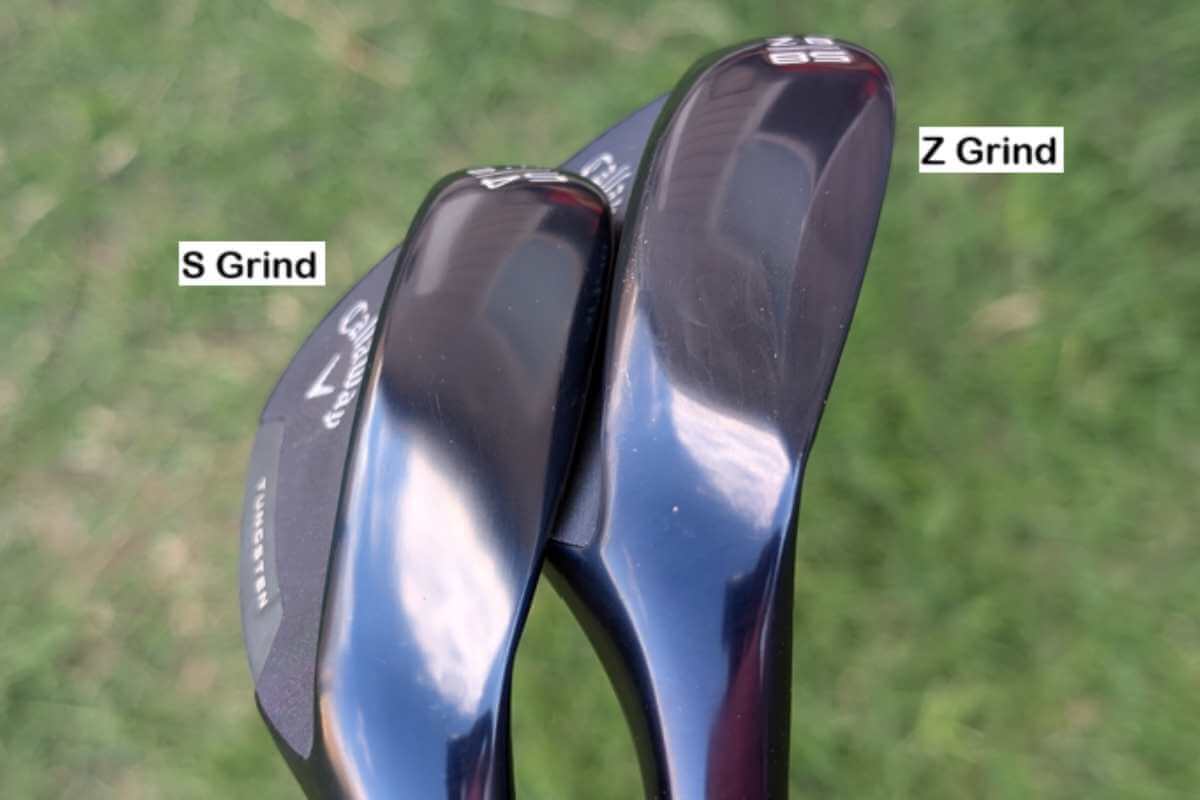
Spin Gen Face Technology: This innovative feature combines more closely spaced grooves, an offset groove-in-groove design and a new face blast treatment to deliver exceptional spin and versatility.Tour-Validated Design: Developed with direct feedback from professional golfers, the Opus wedges showcase a teardrop shape with a higher toe peak, a rounded leading edge and smoother hosel transitions, offering a visually appealing and performance-driven design. Multiple Grind Options: To cater to various playing styles and course conditions, the Opus wedges are available in four distinct sole grinds: T, C, S, and W. This variety allows golfers to select the grind that best matches their swing and typical turf interaction.Models and availability:
The Opus wedge lineup includes the standard Opus and the Opus Platinum versions. The Opus Platinum features advanced materials and finishes, offering a premium option for golfers seeking enhanced aesthetics and performance. These wedges are available in lofts ranging from 48 to 60 degrees with finishes such as Brushed Chrome, Black Shadow, Platinum Chrome and Platinum Blue depending on which version is selected.
The Callaway Opus wedges are designed to provide golfers with exceptional spin control, versatile shot-making capabilities and a refined feel.
With Callaway boasting highlights and key features like that it only made sense to get the Opus and Opus Platinum wedges into our Forum members’ hands for testing.
Key highlights:
The Look: The Opus and Opus Platinum wedges wowed our testers with crisp, clean and classic lines along with their premium finish options.The Feel: These wedges were praised for having solid feel across both models boosting tester’s confidence in short-game shots.The Numbers: Most testers found spin to be impressive in normal and dry conditions. One tester found wet-wedge spin to be lower than he was hoping but not bad overall.First impressions:
GolfSpy_SHARK – Testing the Opus Platinum wedges, he had this to say for his out-of-the-box impressions: “These wedges are beautiful. I love my wedges a different color than my other irons and this blue sticks out perfectly.”




Couples, 65, is 2nd-oldest to break par at Masters
Fred Couples, 65, opened his 40th Augusta appearance with a 1-under 71 -- becoming the second-oldest player to shoot under par in any Masters round.
Practice round in a suit jacket? Cameron Smith leads best of Masters fashion
Cameron Smith turned heads during his practice round Wednesday for his unconventional choice of style.
Watson doubts PGA Tour-LIV deal happens soon
Tom Watson doesn't believe the PGA Tour and LIV Golf will be able to reunify men's professional golf anytime soon.
